TENCEL™ for Yoga: Benefits, Comparisons, Care, and Sustainability
Table of Contents
- What is TENCEL™?
- The Elindra TENCEL™ Leggings: Composition and Construction
- TENCEL™ vs. Polyester
- TENCEL™ vs. Cotton
- Comparison Table
- How to Care for TENCEL™ Garments
- Frequently Asked Questions
- Discover the Collection
What is TENCEL™?
TENCEL™ is the brand name for Lyocell produced exclusively by the Austrian company Lenzing AG. It is neither plastic, nor cotton, nor bamboo: it is a cellulosic fiber made from wood pulp (eucalyptus, beech, spruce), processed using a solvent spinning method.
According to data published by Lenzing, this process operates in a near-closed loop: over 99.8% of the solvent used is recovered and reintroduced into the production cycle, limiting discharges to near zero (source: Lenzing – Lyocell fibers). The solvent used, NMMO, is non-toxic and easily degrades if any residual is discharged into wastewater.
In terms of sourcing, TENCEL™ Lyocell fibers use wood from controlled or certified sources, compliant with FSC® or PEFC standards, following Lenzing's wood and pulp policy (source: TENCEL™ – Fibers). The group has also been recognized multiple times by Canopy, an NGO that evaluates the forest sourcing practices of cellulosic fiber manufacturers.
From a health perspective, TENCEL™ products are certified OEKO-TEX® STANDARD 100 Class I (source: TENCEL™ – Fibers), the strictest class, reserved for textiles in direct and prolonged contact with the skin. This certification involves independent testing for over a thousand potentially harmful substances (source: OEKO-TEX® STANDARD 100).
The Elindra TENCEL™ Leggings: Composition and Construction
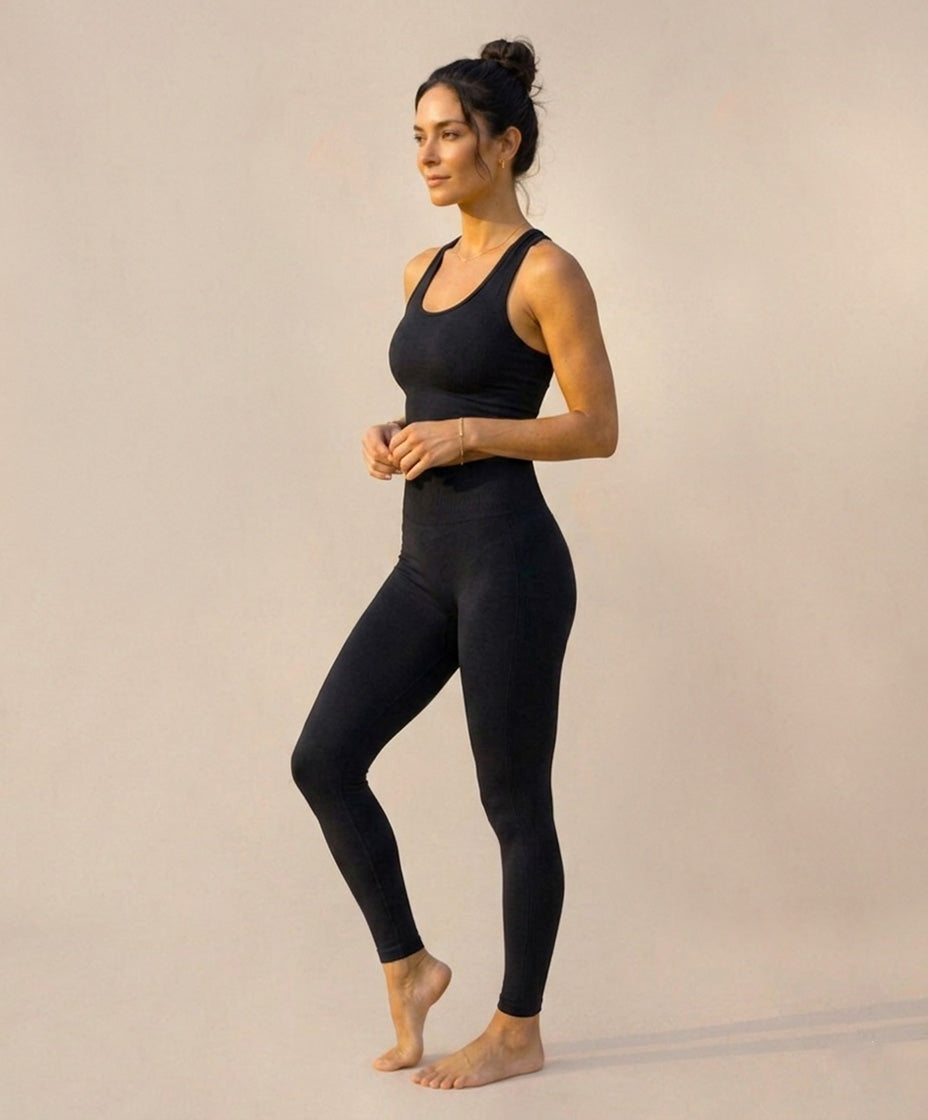
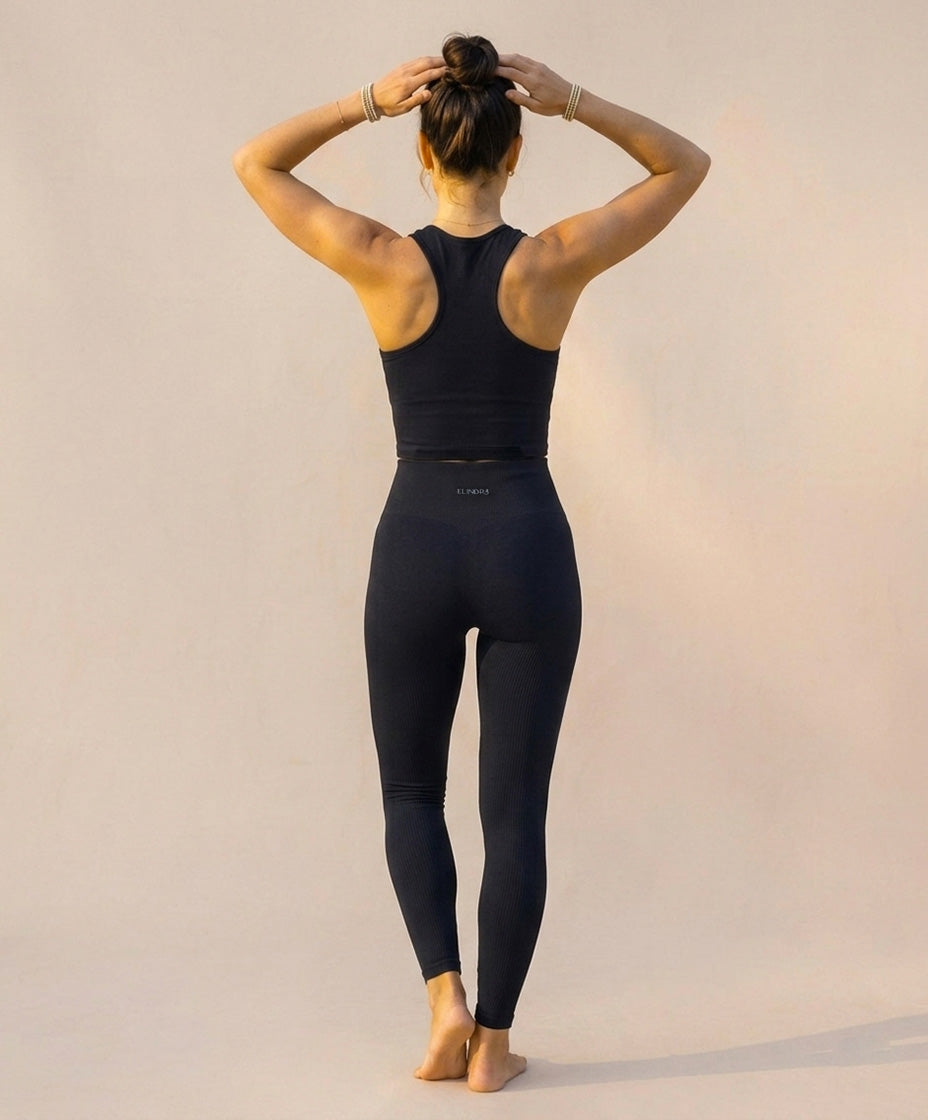
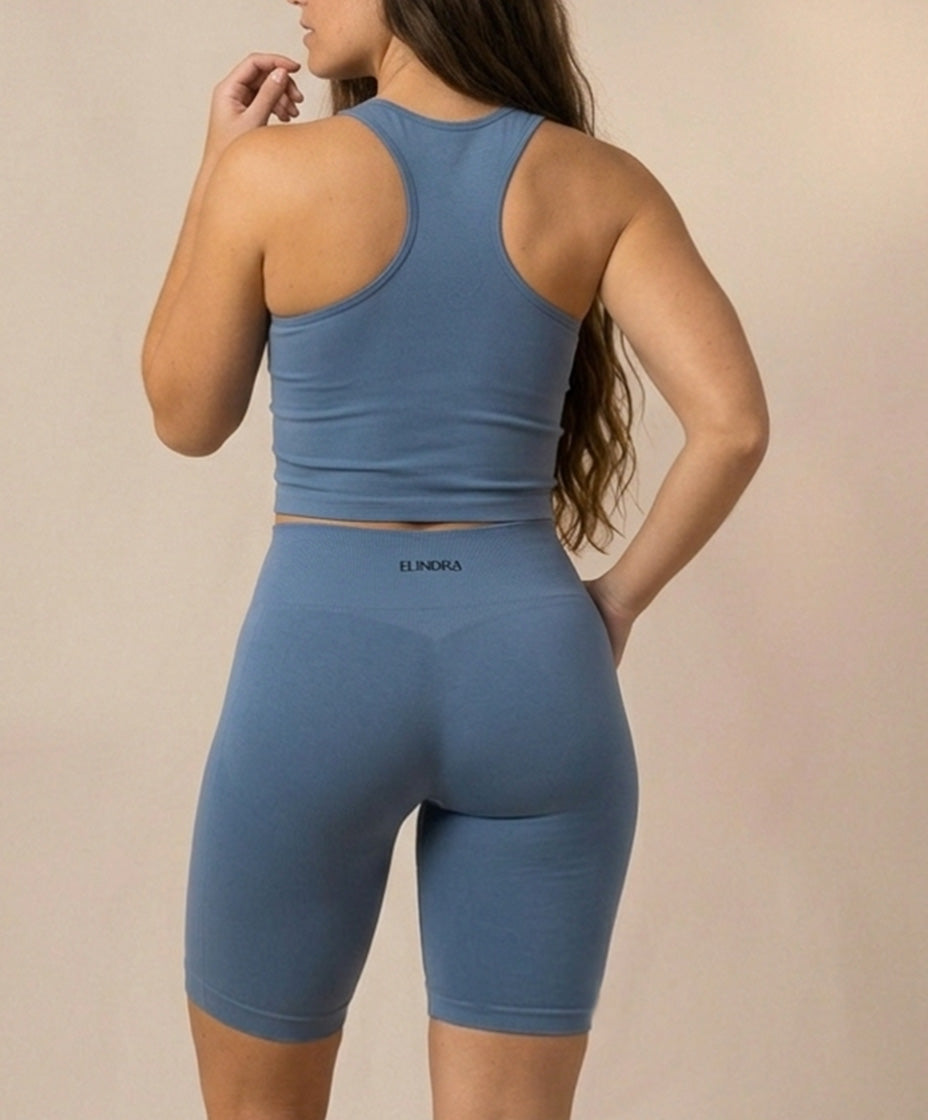
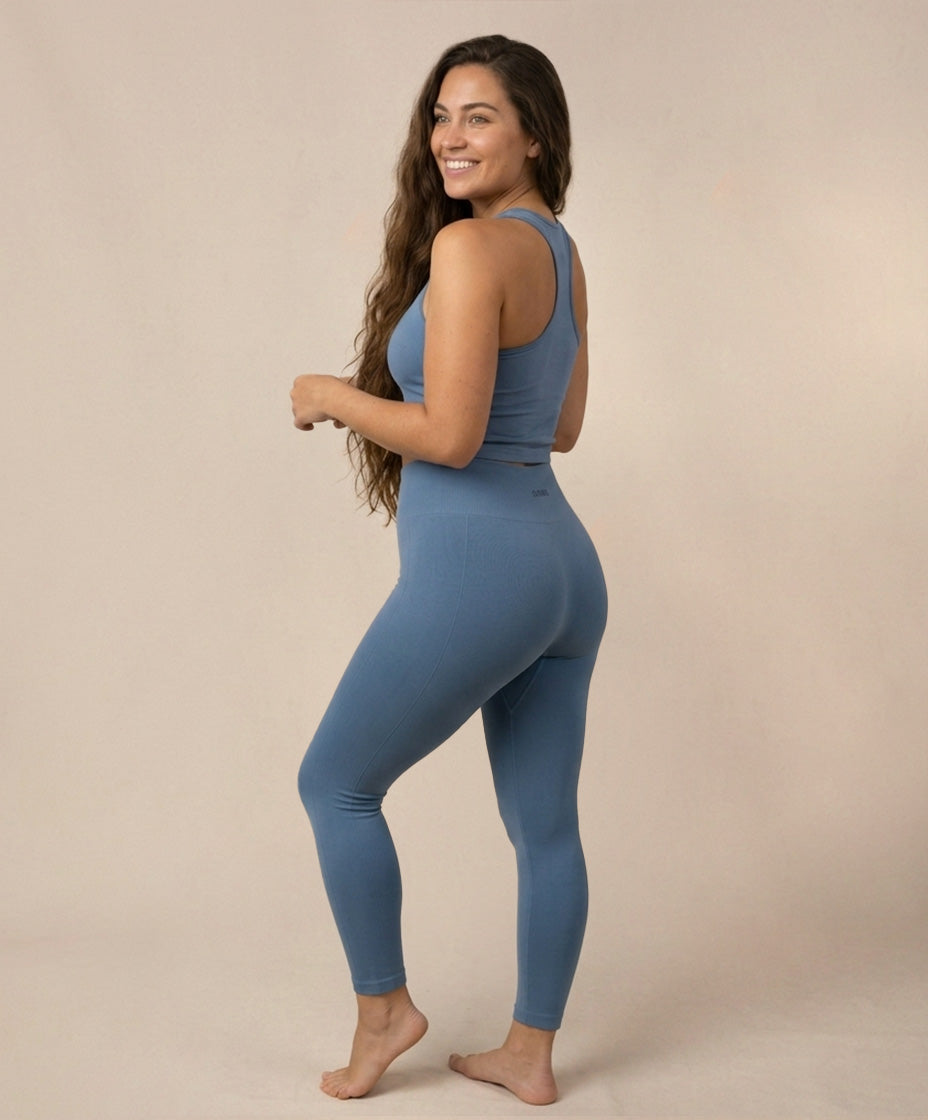
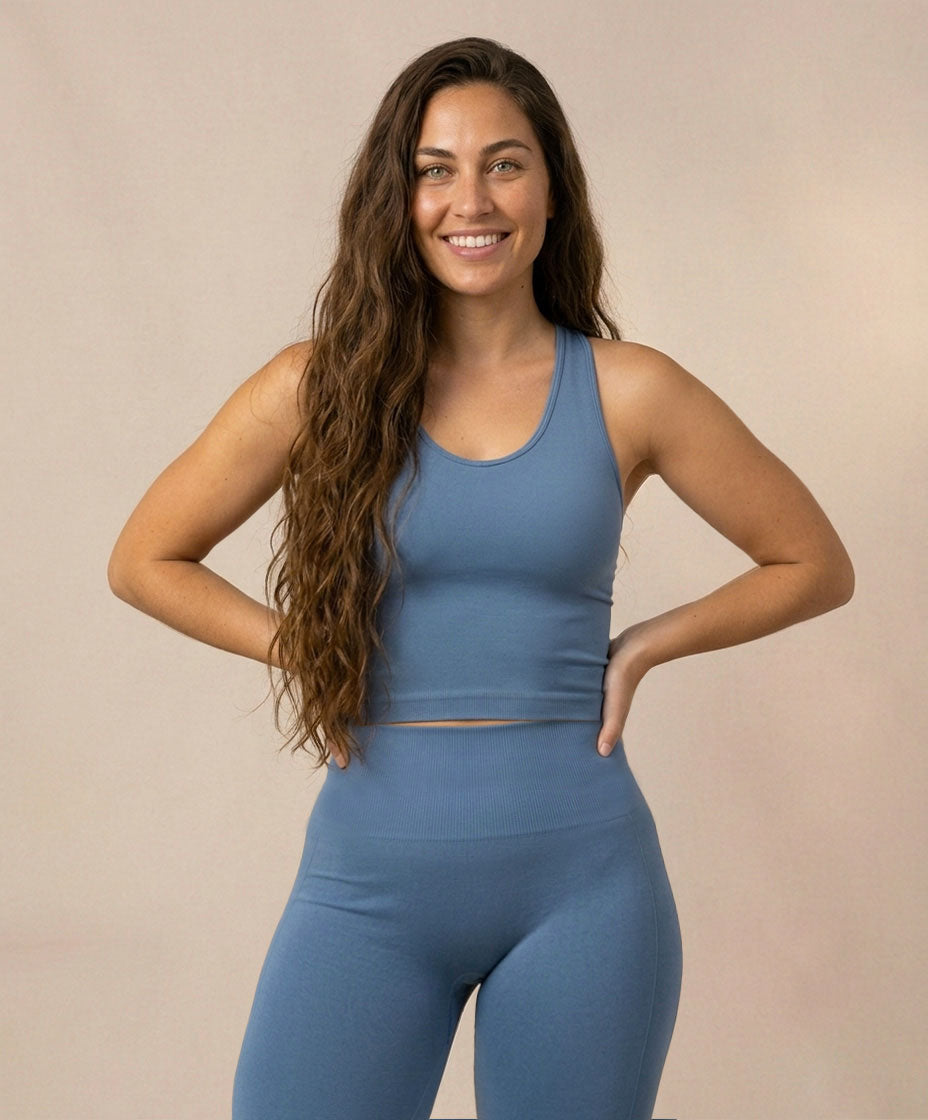
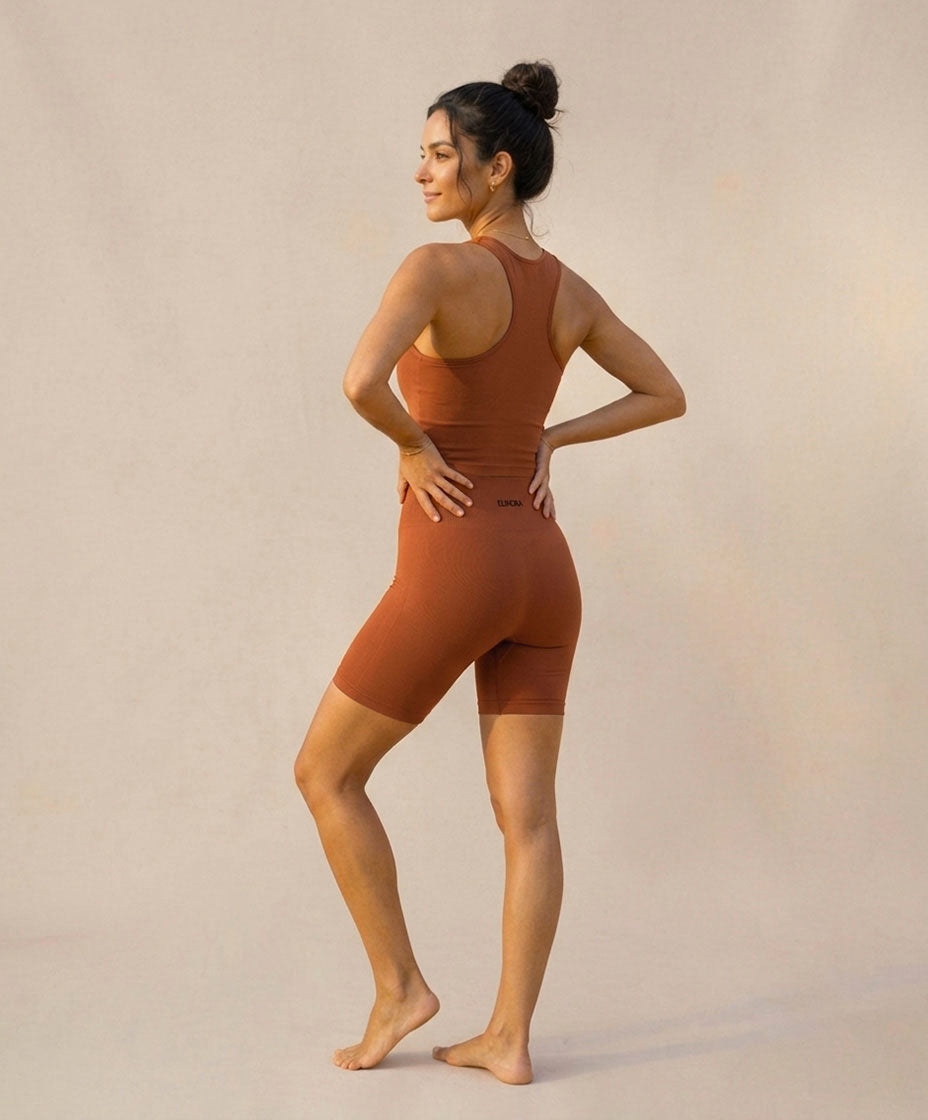
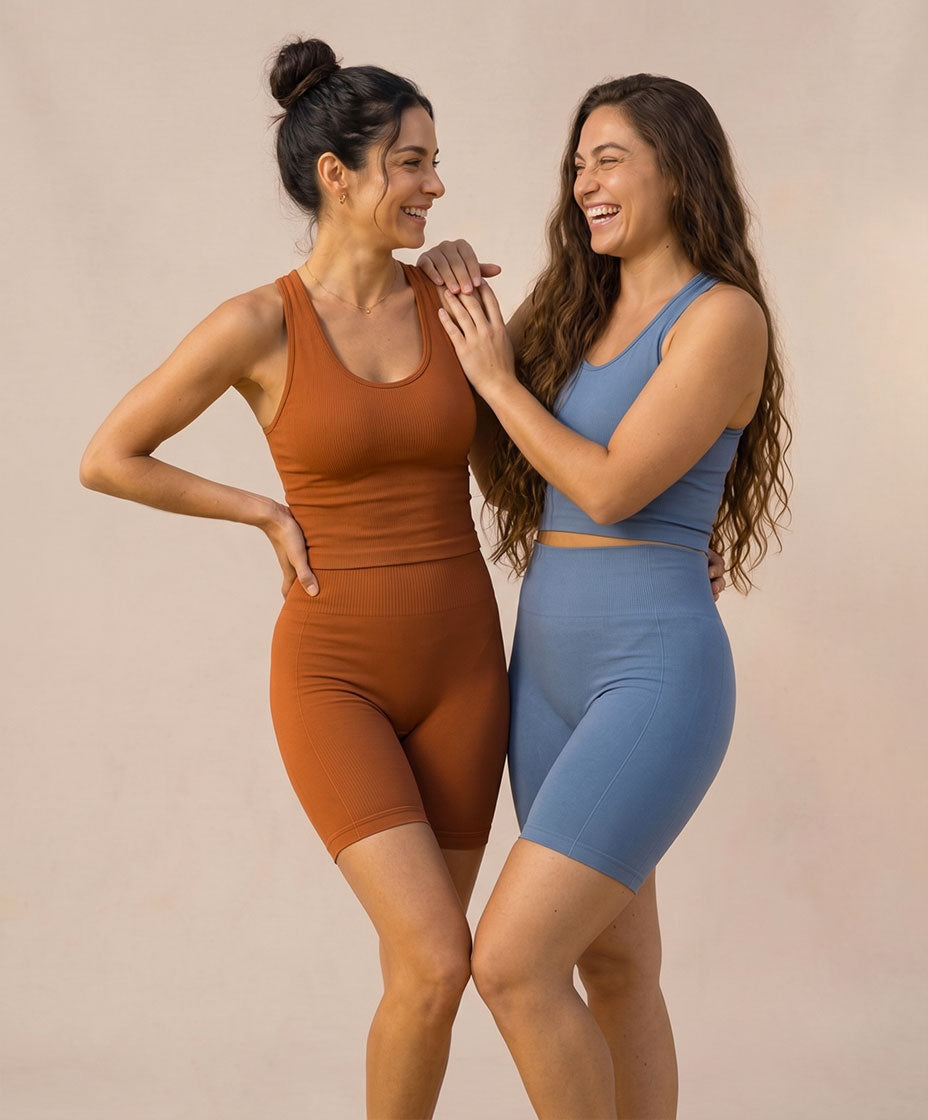
Specifically, for the UltimComfort 7 leggings, here is the actual product technical sheet, not an industry average:
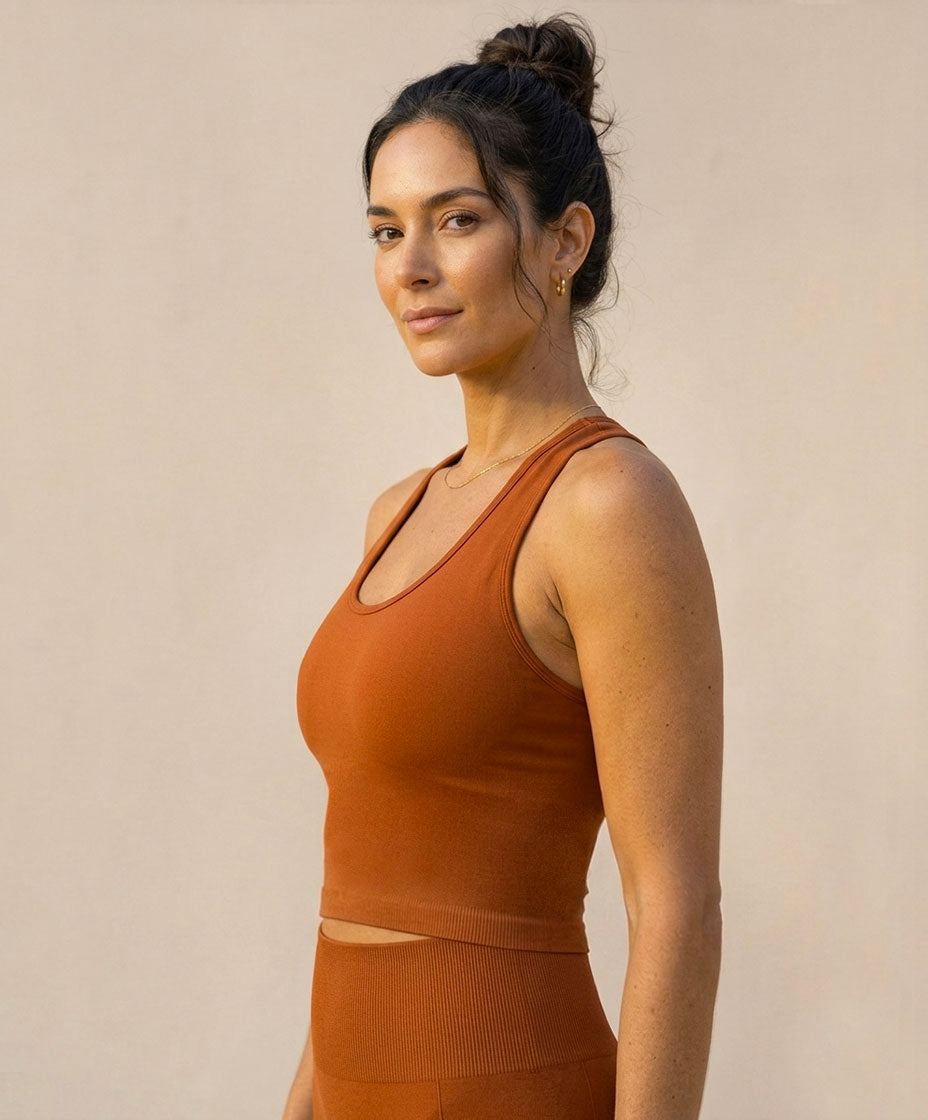
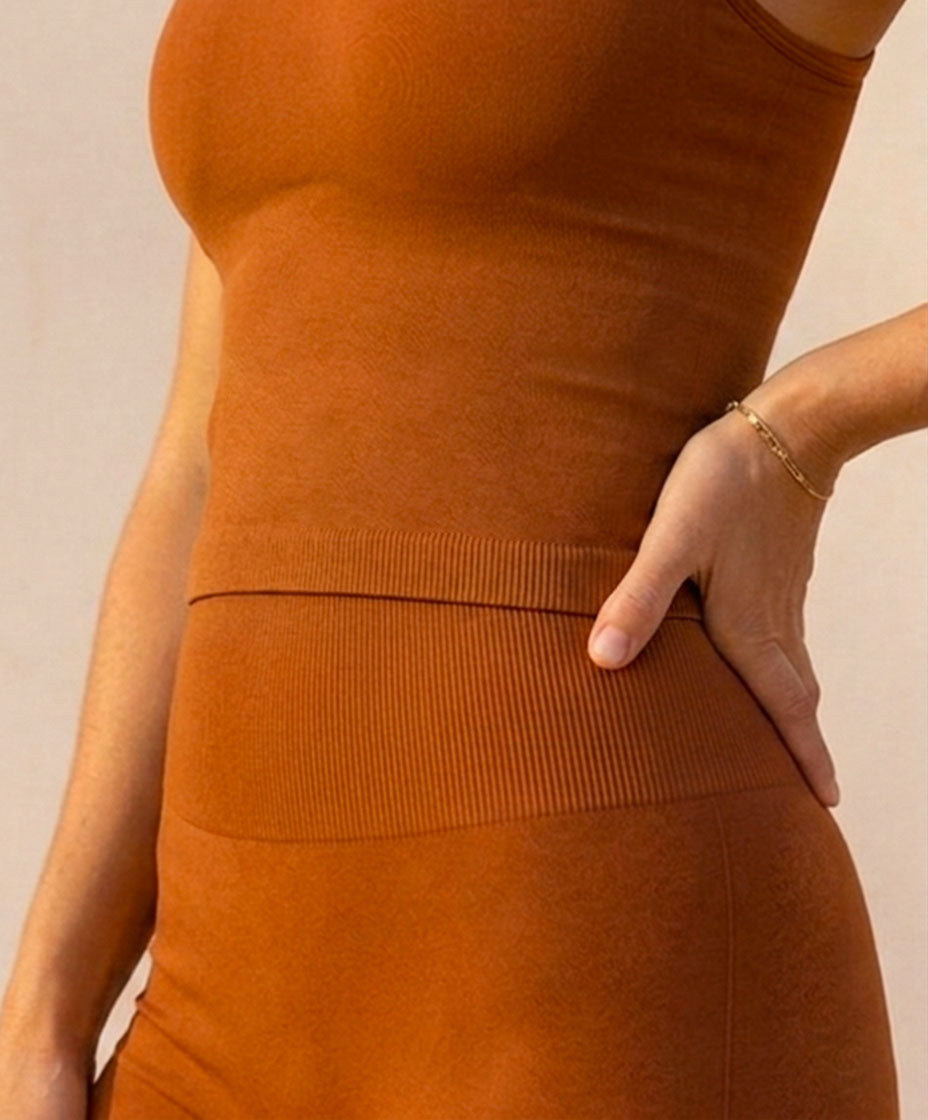
- Composition: 75% TENCEL™ · 20% recycled polyamide · 5% elastane
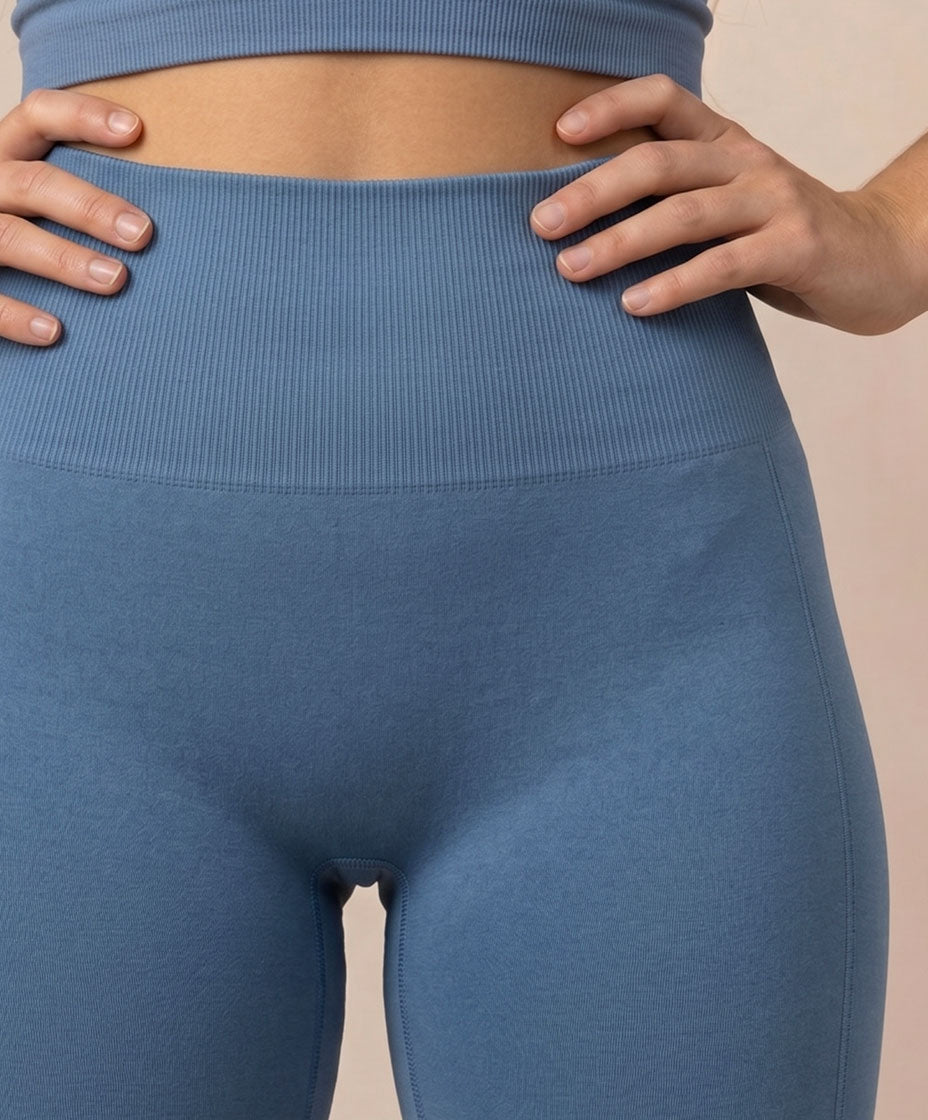
- Seamless construction (no side seams): prevents chafing and marks, especially around the hips during prolonged sitting
- Triangular crotch gusset: designed for mobility and to reduce wear at a common friction point for this type of garment
- Reinforced ribbed high waistband: specifically designed not to roll down during forward bends or inversions
- Manufacturing: designed in Switzerland, knitted in Portugal in an OEKO-TEX® STANDARD 100 certified workshop
The choice of blend is not cosmetic: pure TENCEL™, however comfortable, lacks elastic memory. Without polyamide and elastane, leggings made of 100% natural fiber would lose their shape at the knees after a few sessions. The 75/20/5 compromise aims to retain the majority of natural fiber while ensuring durability over time.

TENCEL™ vs. Polyester
Polyester is a synthetic fiber derived from petroleum. It wicks moisture to the surface but often allows it to remain against the skin, leading to that damp, cold fabric sensation after an intense Vinyasa class.
This prolonged contact with damp skin is not neutral: skin is a semi-permeable organ, capable of absorbing certain substances with which it remains in close contact. Generally, it's not the polyester fiber itself that's the culprit, as it's chemically too inert to migrate through the skin, but rather the additives used during its dyeing and finishing (disperse dyes, finishes, sometimes halogenated compounds). A study published in Chemosphere showed that several of these compounds present in polyester textiles migrate into artificial sweat and are partially absorbed through a skin-simulating membrane (source: ScienceDirect, 2024). This migration is logically more pronounced under conditions of humidity and friction, which are exactly those of a sports session.
TENCEL™ absorbs moisture into the core of the fiber and redistributes it, keeping skin drier for longer, to a certain extent; however, it has limits in very intense practice.
The most documented difference between the two fibers concerns microfiber pollution. A study published in Scientific Reports reports that washing synthetic textiles is responsible for approximately 35% of global primary microplastic pollution in the oceans (source: Nature – Scientific Reports, 2021). A field study conducted by Ocean Wise and published in PLOS ONE showed that the average width of textile microfibers collected during domestic washing is close to that found in oceanic samples (source: Vassilenko et al., PLOS ONE, 2021), supporting the hypothesis that laundry washing is a significant source of this pollution.
TENCEL™, made from natural cellulose, is biodegradable and does not release these types of microplastics during washing. The 20% recycled polyamide present in our leggings does release them, but to a much lesser extent than 100% polyester or nylon leggings.
TENCEL™ vs. Cotton
Cotton is a natural fiber, but it absorbs moisture without distributing it well: a cotton t-shirt soaked in sweat quickly becomes heavy and sticky, which can interfere with floor poses or inversions.
In terms of absorption, data published by Lenzing and confirmed by several independent analyses indicate that, under standard conditions, TENCEL™ absorbs approximately 12-13% of its weight in moisture, compared to 7-8% for cotton (source: TextileTuts – What Is Tencel (Lyocell) Fabric?), which is almost 50% more, with active evaporation that limits the feeling of dampness against the skin.
Conventional cotton is also one of the world's most water and pesticide-intensive crops. TENCEL™, made from FSC®/PEFC wood, requires significantly less water and no agricultural pesticides.
Comparison Table
| Property | TENCEL™ | Polyester | Cotton |
|---|---|---|---|
| Moisture Management | Good to excellent absorption into the core of the fiber, limits in very intense effort | Good on the surface, moisture tends to stagnate | Moderate, absorbs but wicks slowly |
| Breathability | Excellent | Moderate | Excellent |
| Odor Retention | Low | High | Medium |
| Microplastic release during washing | No (biodegradable cellulosic fiber) | Yes, contributes to microfiber pollution¹ | No |
| Biodegradability | Yes, TÜV Austria certified | No | Yes |
| Skin Contact Certification | OEKO-TEX® STANDARD 100, Class I | Variable depending on treatment | Variable depending on treatment |
| Raw Material Origin | FSC®/PEFC Wood (eucalyptus, beech) | Petroleum | Cotton, high water consumption |
¹ According to research published in Scientific Reports and PLOS ONE; see sources at the end of the article
How to Care for TENCEL™ Garments
- Wash at 30 °C (maximum 40 °C), inside out, without fabric softener
- Air dry rather than tumble dry: heat degrades the fiber, causes shrinkage, and damages elasticity in the long term
- Dry flat or on a hanger, in the shade
- No direct ironing; low-temperature steam if necessary
- Avoid aggressive stain removers; fresh stains come out well with cold water
A well-maintained garment lasts longer, which remains the best leverage against textile waste.
Frequently Asked Questions
Does the waistband roll down during a dynamic yoga class?
No. The high ribbed waistband was specifically designed to stay in place during movements, including inversions, and it's also the most positively cited point in our customer reviews.
Why choose TENCEL™ over polyester?
TENCEL™ is a naturally hydrophilic fiber: it captures moisture at the core of the fiber to regulate temperature, whereas polyester merely moves it to the surface.
Why blend TENCEL™ with polyamide in leggings?
The UltimComfort 7 leggings are made of 75% TENCEL™, 20% recycled polyamide, and 5% elastane. Pure TENCEL™ lacks the elastic memory needed for sports leggings: without this addition, the material would lose its shape at the knees after a few sessions.
Does TENCEL™ show sweat marks?
During very intense practice, a slight moisture mark may appear because the fiber absorbs moisture deeply rather than pushing it to the surface. For gentle yoga or Pilates, this is not an issue reported by our customers.
Is TENCEL™ certified by independent organizations?
Yes: FSC®/PEFC for wood origin, and TÜV Austria for fiber biodegradability.
Elindra TENCEL™: From Design to Your Practice
The UltimComfort 7 leggings are designed in Switzerland and knitted in Portugal, in an OEKO-TEX® STANDARD 100 certified workshop. Fewer kilometers, more traceability, no compromise on quality.

Cited Sources
- Lenzing AG — Lyocell fibers, properties and closed loop
- TENCEL™ (Lenzing) — Fibers, OEKO-TEX / FSC / PEFC certifications
- OEKO-TEX® — STANDARD 100, certification criteria
- Canopy — Assessment of forest sourcing practices
- Vassilenko et al., Domestic laundry and microfiber pollution: Exploring fiber shedding from consumer apparel textiles, PLOS ONE, 2021 — NCBI link
- Washing load influences the microplastic release from polyester fabrics by affecting wettability and mechanical stress, Scientific Reports, 2021 — nature.com
- Health risks from exposure to chemicals in clothing – Non-regulated halogenated aromatic compounds, Chemosphere, 2024 — sciencedirect.com
- TextileTuts — What Is Tencel (Lyocell) Fabric?, moisture absorption data
- UltimComfort 7 product sheet and verified customer reviews — elindrayoga.com
Last updated: August 2026
Tencel collection